

Questions & Answers

Your content goes here. Edit or remove this text inline or in the module Content settings. You can also style every aspect of this content in the module Design settings and even apply custom CSS to this text in the module Advanced settings.

Your content goes here. Edit or remove this text inline or in the module Content settings. You can also style every aspect of this content in the module Design settings and even apply custom CSS to this text in the module Advanced settings.

Your content goes here. Edit or remove this text inline or in the module Content settings. You can also style every aspect of this content in the module Design settings and even apply custom CSS to this text in the module Advanced settings.

Your content goes here. Edit or remove this text inline or in the module Content settings. You can also style every aspect of this content in the module Design settings and even apply custom CSS to this text in the module Advanced settings.

Your content goes here. Edit or remove this text inline or in the module Content settings. You can also style every aspect of this content in the module Design settings and even apply custom CSS to this text in the module Advanced settings.

Q&A goes here

General Questions

What is a contact surface pressure indicating film?

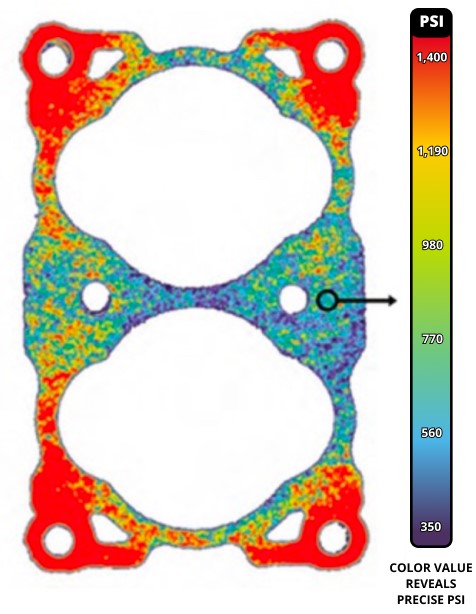
It is a specialized material that changes color to reveal the pressure distribution and magnitude between any two contacting or impacting surfaces.

How does the pressure indicating film work?

It contains microcapsules that break upon contact, producing a color change proportional to the applied force.

What are the main applications of these films?

They are used in component assembly, quality control, machinery maintenance, product design, packaging, sealing, printing, medical devices, automotive, aerospace, and more.

What are the advantages of using pressure indicating films?
  • Easy to use
  • No power source required
  • Instant results
  • Shows both pressure magnitude and distribution
  • Works on complex surface geometries
Which industries use pressure indicating films?
They are used in automotive, aerospace, medical, manufacturing, packaging, printing, electronics, sports, and many other industries.
What are the differences between the types of films you offer?

We offer films with eight different sensitivity ranges, from 2 PSI up to almost 50,000 PSI, depending on the application requirements.

Usage & Application

How do I use the pressure indicating film?
  • Cut the film to the desired size.
  • Place it between the contacting surfaces.
  • Apply pressure.
  • Remove the film and analyze the color intensity to assess pressure distribution and magnitude.
How do I analyze the color intensity of the film?
You can visually compare it to a reference scale or use specialized software for precise data analysis.
Can the film be used in environments with liquids or oils?
It is not recommended, as liquids may interfere with the film’s reaction. We offer film protection surfaces that encases the film and protects it from liquid ingress.
Can the films be used in vacuum or gas environments?
They work best for solid-to-solid contact but may be used in some specialized liquid spray impact measurement.
Can the film provide real-time pressure measurement?
No, the film captures a static image of the applied pressure but does not provide continuous measurement.
Are the films safe for medical or food-contact applications?
The pressure films are inert and don’t contain any toxic materials.
Can the films be used on plastics, metals, glass, etc.?
Yes, they work on a wide variety of materials.

Specifications & Product Selection

How do I choose the right pressure indicating film for my application?

Selection depends on the expected pressure range. We can help you determine the best option.

What pressure ranges can your films measure?

Our films can measure pressures from below 10 psi up to over 43,200 psi.

Can the film be used on curved or irregular surfaces?

Yes, the films are thin and flexible, allowing them to conform to various surface geometries.

Can I cut the film to fit my specific needs?
Yes, you can trim the film without affecting its functionality with a scissor or knife or any cutting instrument.
How does temperature or humidity affect the film’s accuracy?
Extreme temperatures or humidity may alter the film’s sensitivity. We recommend storing and using them in controlled environments.
Are the films reusable?
No, once the film changes color, the change is permanent.

Storage & Handling

How should I store the film to maintain accuracy?
Store it in a dry, temperature-controlled environment, away from direct light and excessive humidity.
What is the shelf life of the film?
When stored properly, it can last for several years without losing accuracy.
What happens if the film is exposed to light before use?
Prolonged exposure to UV light can degrade the film’s sensitivity.

Support

Do you provide technical support for application questions?
Yes, our expert team can help you with selection, usage, and analysis.

Data Analysis

Do you provide tools for digital analysis of the films?
Yes, we offer pressure analysis software to quantify the color intensity of the pressure indicating film.
How does the analysis software work?
The film is scanned and uploaded to the software, which interprets the colors to provide numerical pressure distribution data.
Can I generate reports with the pressure data?
Yes, our software allows you to create detailed reports.

Fujifilm Prescale®

What is Fujifilm Prescale®?
A thin, mylar-based, one-time-use film that reveals the distribution and magnitude of pressure between mating/impacting surfaces.
What pressure ranges are available?
Eight sensitivities spanning ~0.87–43,200 psi (ULTRA EXTREME LOW through SUPER HIGH).
Which side goes where?
Place the textured side of the donor sheet against the textured side of the receiver sheet, insert at the contact, apply force, then remove.
How long should I hold the load?
Bring the parts together gently, load to normal pressure, and wait ~1 minute after pressure stabilizes before separating.
Can I measure on curved or complex shapes?
Yes. Use multiple small pieces or petal-style cutouts to conform while avoiding crinkling and shear.
How do I interpret color by eye?
Match the impression to the Color Correlation Book swatches; darker = higher pressure.
How do I register the print to the exact physical location on my part?
Use landmarks (scribe/outline) or small off-path registration holes before loading to correlate pressure maps to part features.
Where is Prescale commonly used?
Heat seals, gaskets/flanges, heat sinks, lamination/presses, nip/roller setups, composite layups, and more.
How do I take a quick nip width impression?
Clean/dry rolls → place film centered at the nip (tack if needed) → close gently, load to normal pressure → wait ~1 minute → open and evaluate.
How can I improve repeatability between runs?
Repeat tests with fresh pieces using a consistent protocol and control ambient temperature/humidity.
Do I need to consider film thickness in tight gaps?
Yes—thickness (4, 8, or 20 mils, range-dependent) can matter in very tight tolerances.
How should I handle film to avoid false marks?
Prevent contamination, avoid pressing the active surface, and handle by edges with clean tools.
How do I reduce shear artifacts?
Use fixtures/swivels to align load vertically and avoid lateral drag during closure and opening.
What is the shelf life?
Typically about two years (range- and storage-dependent).
How does the film work?
Force ruptures microcapsules in the transfer layer; the dye reacts on the developer layer to form a permanent color image whose intensity is proportional to pressure.
Is it reusable?
No; it’s a disposable, one-time use film that produces an instantaneous permanent record.
What are the basic steps to use the film?
Remove sheets → measure area → cut donor/receiver to size → assemble with textured sides touching → place at the contact → load and remove → compare color to the correlation chart or scan.
Are there any pre-load tips?
Align surfaces and apply force vertically to avoid bias; reduce lateral shear during closure/opening.
What if liquids or oils are present?
Protect the film from fluid interference (e.g., edge-seal or use compatible barriers) and verify compatibility under your loads.
Can I get numeric data and statistics from impressions?
Yes—scan impressions and quantify with optical imaging software for calibrated pressures and statistics.
What accuracy should I expect?
±10% or better under specified conditions using densitometric methods.
Can I capture nip width on rollers?
Yes. Take static impressions with the machine down (felts moved aside) to assess crown/parallelism and archive results.
Why do I see streaks or smears on the print?
Likely shear during loading/unloading or contamination/crinkling—align force vertically and keep interfaces clean/dry.
Edges are darker than the center—what does that suggest?
Non-uniform loading or misalignment (e.g., crown mismatch); inspect center vs. edge nip widths and adjust.
What are the key technical specs?
Operating temp ~68–95 °F (20–35 °C; some ranges narrower), humidity ~35–80% RH (range-specific), spatial resolution ~5–15 µm, accuracy ±10%, gauges ~4/8/20 mil, typical shelf life ~2 years.
Any tips for cutting odd shapes?
Use templates or petal-style segments to conform to complex curves without crinkling.
How should I store film before and after use?
Keep clean and dry and avoid ambient swings; re-pack promptly after handling.
Is Prescale safe to use?
Use as directed and follow standard industrial hygiene; MSDS is available upon request. If you’d like, I can now drop this into your site’s accordion template or export a clean HTML/PDF.
Cart